
Latin America Retirement · 2026 Guide
12 Best Countries to Retire in Latin America
A detailed, practical comparison of twelve retirement destinations across Latin America—starting with Puerto Rico—and covering residency pathways, healthcare, taxes, property ownership, climate, connectivity, and day-to-day lifestyle.
Reviewed September 2026 · LiBe Editorial Research · Independent relocation and property education
Start here
The best retirement country is the one that fits your real life
Latin America can offer warm climates, distinctive cities, coastal and mountain communities, private healthcare options, cultural depth, and housing choices across a wide range of budgets. None of those advantages eliminates the need for careful planning. Residency status, health coverage, taxation, estate planning, property title, insurance, banking, transportation, language, and family access can matter more than a destination’s headline cost of living.
This guide ranks twelve destinations using a retirement-focused framework. It is not a promise that one country is universally safest, cheapest, or easiest. Puerto Rico leads because it can provide an unusually familiar transition for eligible U.S. retirees, while Panama, Costa Rica, Mexico, Colombia, Ecuador, Uruguay, and the remaining destinations offer different combinations of residence pathways, services, and lifestyle.
Important: Puerto Rico is a U.S. territory, not an independent country. It is included—and ranked first—because it is one of Latin America’s most relevant retirement destinations. Immigration, tax, healthcare, and property rules depend on citizenship, residence, income source, family status, and individual facts. Verify current requirements with licensed professionals and the relevant government authority before relocating, buying property, or changing tax residence.
How to choose
Nine rules for comparing retirement destinations
Test ordinary life—not vacation life
Rent long enough to experience groceries, healthcare appointments, banking, transportation, utilities, noise, weather, bureaucracy, and the off-season before buying.
Design healthcare before the move
Confirm insurance eligibility, exclusions, provider networks, medication access, emergency transport, chronic-care capacity, and what happens if your health changes.
Verify a legal residence pathway
Use current government requirements. Pension, income, investment, criminal-record, insurance, apostille, translation, and physical-presence rules can change.
Model taxes across jurisdictions
Coordinate residence, source-of-income, pension, Social Security, investment, property, inheritance, reporting, and treaty questions before changing domicile.
Rent before purchasing
A neighborhood that works for two weeks may fail during rainy season, peak traffic, extreme heat, political disruption, or a medical emergency.
Plan for aging—not only arrival
Evaluate stairs, walkability, driving, home care, accessibility, proximity to hospitals, social support, language, and the feasibility of returning home.
Protect the exit plan
Understand resale demand, title, transaction costs, currency exposure, foreign-seller withholding, probate, powers of attorney, and how heirs would manage the asset.
Price the complete annual budget
Compare housing, association fees, utilities, insurance, healthcare, transportation, travel home, taxes, maintenance, domestic help, and a realistic currency and emergency reserve.
Build language and community resilience
Evaluate language access, local relationships, family travel, social isolation, trusted professional support, and who can help during illness, emergencies, or administrative problems.
Inside this guide
Ranked destinations: Puerto Rico, Panama, Costa Rica, Mexico, Colombia, Ecuador, Uruguay, Dominican Republic, Belize, Brazil, Paraguay, and Argentina.
Decision topics: residence eligibility, healthcare, tax planning, property ownership, cost predictability, climate exposure, language, connectivity, community, and long-term aging.
Advertisement
01 · Comparison
How the 12 retirement destinations compare
| Rank | Destination | Best suited to | Residence starting point | Primary caution |
|---|---|---|---|---|
| 1 | Puerto Rico | U.S. citizens seeking Caribbean living within U.S. systems | No immigration process for U.S. citizens; U.S. rules for others | Storm, insurance, infrastructure, and cost exposure |
| 2 | Panama | Pensioners wanting connectivity and mature private services | Pensionado permit for qualifying lifetime pensions | Heat, traffic, humidity, and neighborhood variation |
| 3 | Costa Rica | Nature-oriented retirees seeking established expat communities | Pensionado temporary residence | Higher costs and uneven roads/infrastructure |
| 4 | Mexico | Retirees wanting maximum geographic and lifestyle choice | Temporary or permanent residence based on eligibility | Local security, water, healthcare, and title differences |
| 5 | Colombia | Urban retirees prioritizing private healthcare and climate choice | M Pensionado visa for qualifying pension income | Security varies and tax residence requires planning |
| 6 | Ecuador | Dollar-based budgeting and highland living | Temporary jubilado residence | Altitude, seismic exposure, and regional service gaps |
| 7 | Uruguay | Retirees prioritizing institutional stability and coastal cities | Temporary or permanent legal residence | Costs can exceed regional expectations |
| 8 | Dominican Republic | Caribbean living with strong air links | Pensioner/retiree residence category | Storm, title, traffic, and service-quality variation |
| 9 | Belize | English-speaking Caribbean retirement | Qualified Retirement Program or regular immigration route | Small healthcare system and imported-goods costs |
| 10 | Brazil | Portuguese speakers seeking scale, culture, and varied climates | Retirement/pension temporary visa when eligible | Complex taxes, bureaucracy, and local security |
| 11 | Paraguay | Independent retirees seeking a lower-profile base | Current temporary/permanent residence categories | Heat, limited specialist care, and changing procedures |
| 12 | Argentina | Urban culture, healthcare, food, and public transportation | Pensionado or rentista temporary residence | Inflation, currency, and regulatory volatility |
Methodology
How LiBe evaluated the best places to retire
The ranking weighs practical residence options, healthcare depth, housing choice, daily-life usability, connectivity, climate variety, community, cost predictability, legal transparency, and long-term aging considerations. It does not treat low prices as sufficient. A lower-cost destination can become expensive when it requires frequent flights, imported medication, private transport, backup utilities, or emergency travel.
Rankings are editorial comparisons, not financial projections or legal determinations. Requirements were checked against official sources available in September 2026, but consulates and agencies may change thresholds, forms, fees, interpretations, or appointment procedures.

Puerto Rico leads the list
A Caribbean retirement with unusually familiar U.S. connections
Puerto Rico earns first position because eligible U.S. retirees can relocate without a visa, continue using the U.S. dollar, access familiar banking and legal concepts, and remain connected by frequent flights to the continental United States. San Juan provides the island’s deepest concentration of hospitals, specialists, services, and condominium housing; Dorado emphasizes resort-oriented communities; Rincón offers a smaller west-coast lifestyle; and mountain or southern municipalities provide different climates and price points.
That familiarity does not remove island risk. Electricity, water, road conditions, specialist access, insurance, hurricane exposure, condominium reserves, and property maintenance vary materially. Non-U.S. citizens remain subject to U.S. immigration law.
02 · Puerto Rico
#1 Puerto Rico: the most familiar Caribbean transition for many U.S. retirees
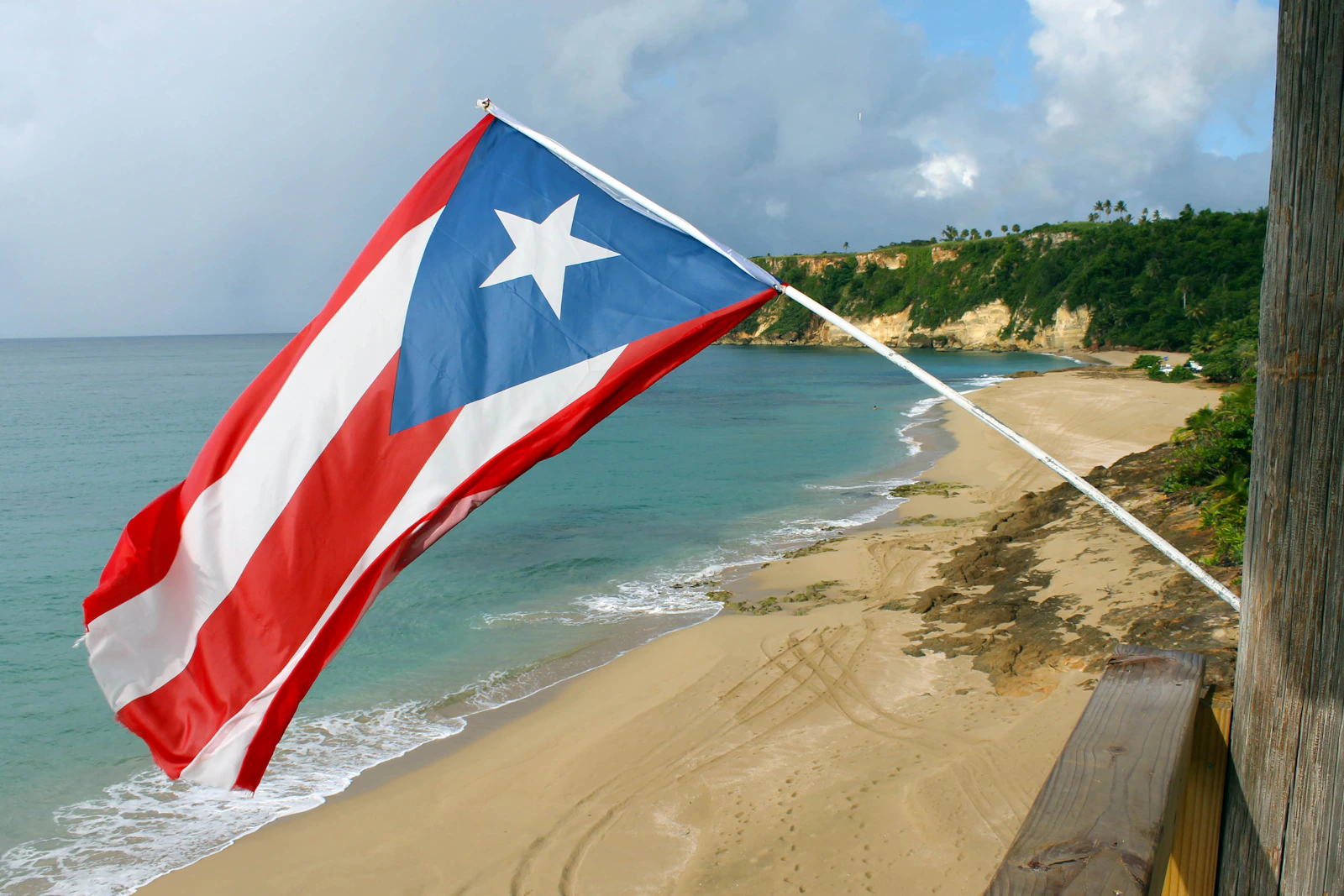
Puerto Rico combines Caribbean geography and Latin culture with the U.S. dollar, U.S. federal institutions, domestic flights from the mainland, and no immigration process for U.S. citizens. That combination can simplify relocation for retirees who want a warmer climate without creating a foreign-country immigration plan.
Where retirees look
San Juan and nearby municipalities offer the broadest healthcare, airport access, dining, cultural life, and condominium inventory. Dorado emphasizes premium communities and proximity to the metropolitan area. Rincón and the west attract buyers seeking surf culture and smaller communities. Caguas and mountain municipalities can provide cooler elevations, while Ponce and the south have distinct urban and climate profiles.
Healthcare, Medicare, and taxes
Medicare operates in Puerto Rico, but enrollment details, Medicare Advantage networks, provider participation, specialist access, and supplemental coverage should be checked before moving. Tax treatment is fact-specific. Puerto Rico’s incentive programs are not automatic retirement exemptions, and moving does not transform every pension, Social Security payment, investment gain, or mainland-source dollar into tax-free income. Use advisers who understand both Puerto Rico and U.S. federal rules.
Housing and risk
Inspect title, flood and storm exposure, generators or batteries, cisterns, insurance availability, condominium budgets, special assessments, accessibility, elevators, mold, salt corrosion, and post-storm repair logistics. A home that is attractive in good weather must also work during outages and medical events.
Best for: U.S. citizens who value domestic connectivity, dollar-based finances, bilingual environments, and multiple lifestyle regions.
Advertisement
03 · Panama
#2 Panama: a mature pensionado route with strong international connectivity

Panama pairs a major international air hub with dollar-linked daily commerce, private hospitals, banking, established expat communities, and climates ranging from tropical coast to cooler highlands. Panama City suits retirees who want specialists, high-rise living, and frequent flights; Boquete offers a mountain setting; Coronado and Pacific communities provide beach access within reach of the capital.
Residence pathway
Panama’s official Pensionado permit is designed for applicants receiving a qualifying lifetime pension. The published baseline is B/.1,000 per month, plus B/.250 for each dependent; an official exception may apply when the applicant owns qualifying Panamanian real estate above the stated value. Documentation, pension source, authentication, health, and background requirements should be reviewed with the current government checklist.
Healthcare and property
Private healthcare is deepest in Panama City, so retirees considering smaller communities should map emergency transport and specialist travel. Foreigners can generally purchase titled property, but coastal, island, concession, rights-of-possession, corporate-share, and presale transactions require independent review.
Watch carefully
Heat, humidity, traffic, flooding, building management, mold, air-conditioning costs, infrastructure outside core areas, and banking compliance can affect daily life. Rent in both wet and dry seasons before buying.
Best for: retirees with qualifying pension income who want an established residence category, airport connectivity, and a choice between city, beach, and highland living.
04 · Costa Rica
#3 Costa Rica: nature, healthcare pathways, and established retirement communities

Costa Rica remains a leading retirement destination because it combines political continuity, dramatic biodiversity, an established pensionado category, private medical care, and long-developed international communities. The Central Valley offers milder elevations and access to major hospitals; Guanacaste and the Central Pacific provide beaches and dry-season appeal; mountain towns can offer cooler nights and greener surroundings.
Pensionado residence
The official pensionado framework requires documentation of a lifetime pension of at least US$1,000 per month. Applicants should verify apostilles, translations, criminal records, family documents, fees, and the current process with the Dirección General de Migración y Extranjería. Approved residents generally need to address Costa Rican social-security enrollment and related obligations under the rules applicable to their status.
Healthcare and daily life
Many retirees combine the public system with private care, but appointment access, insurance, preexisting conditions, medications, and distance from hospitals must be planned. Popular areas can be more expensive than regional stereotypes suggest.
Property and infrastructure
Foreigners can commonly own titled property, yet maritime-zone concessions, water availability, roads, drainage, septic systems, landslides, flood exposure, and unpermitted construction require careful review. Never treat a corporation or informal occupancy arrangement as a substitute for title diligence.
Best for: nature-oriented retirees who want established communities and can tolerate higher costs, rain-season logistics, and infrastructure variability.
05 · Mexico
#4 Mexico: the broadest range of retirement lifestyles in the region

Mexico offers more retirement choices than any other destination on this list: colonial cities, Pacific and Caribbean coasts, major metropolitan areas, desert communities, highland climates, and border-adjacent locations. San Miguel de Allende, Lake Chapala, Mérida, Mexico City, Oaxaca, Puerto Vallarta, Los Cabos, and the Riviera Maya serve very different priorities.
Residence and healthcare
Mexico provides temporary and permanent residence routes, often evaluated through financial solvency, pension, family, or other qualifying circumstances. Financial thresholds and accepted evidence can vary by consulate and change over time, so applicants should use the specific consulate’s current checklist. Private healthcare is extensive in major cities and established retirement destinations, while specialist depth and emergency capacity may be limited elsewhere.
Location matters more than national averages
Security, water reliability, heat, air quality, traffic, walkability, hospital access, insurance, and costs can change substantially between states and neighborhoods. Visit during the hottest or wettest period—not only peak season.
Buying property
Foreigners purchasing residential property in restricted coastal or border zones commonly use a Mexican bank trust. A fideicomiso is a legal holding structure, not proof that title, permits, liens, boundaries, condominium finances, utilities, or seller authority are correct.
Best for: retirees who want maximum choice and are willing to select a city, healthcare network, climate, and legal structure carefully.
Advertisement
Retirement budget
Build a complete retirement budget—not a vacation estimate
Model housing, healthcare premiums, uncovered care, medication, transportation, food, utilities, domestic help, insurance, taxes, legal and accounting support, document renewals, travel home, emergency evacuation, accessibility modifications, currency movement, and at least one major unexpected expense. Separate recurring local spending from imported or dollar-linked costs.
Run three scenarios: ordinary life, a medical year, and an emergency relocation year. A plan is not resilient if it works only while both health and exchange rates remain favorable.

Residence is not tax residence
Coordinate immigration, taxation, healthcare, and estate planning
A residence permit answers whether you may live in a country. It does not by itself determine every tax obligation, healthcare entitlement, work right, property rule, or succession outcome. Physical presence, domicile, center of economic interests, citizenship, income source, account location, treaties, and local elections can produce different results.
Before moving, obtain coordinated advice covering departure-country obligations, destination-country residence, pension and Social Security treatment, investment income, foreign accounts, real estate, gifts, wills, beneficiaries, powers of attorney, incapacity, and heirs in multiple jurisdictions.
06 · Colombia
#5 Colombia: private healthcare, varied climates, and dynamic urban life

Colombia can appeal to retirees who want major-city services at elevations that avoid year-round coastal heat. Medellín and nearby municipalities offer extensive private healthcare and an active international community; Bogotá provides the country’s broadest specialist and cultural infrastructure; Pereira, Manizales, Armenia, Bucaramanga, Cali, Cartagena, and Santa Marta each create different tradeoffs.
Pensionado visa
Colombia’s M Pensionado visa is for applicants with a qualifying lifetime pension. The official standard ties the required monthly amount to three Colombian legal monthly minimum wages. Current rules also require supporting pension evidence, background documentation, medical information, and qualifying health coverage. The visa may be issued for up to three years, does not authorize work, and can count toward residence eligibility under applicable rules.
Healthcare, taxes, and housing
Private healthcare can be strong in large cities, but insurance admission, preexisting conditions, waiting periods, provider networks, and continuity after a visa change require planning. Colombian tax residence and worldwide-income exposure can become relevant based on presence and facts, so obtain cross-border advice before moving funds or changing domicile.
Foreigners can buy property, but ownership does not automatically confer the desired visa. Review title, liens, building approvals, condominium finances, seller authority, tax history, and currency transfer documentation.
Best for: urban retirees seeking climate choice, private healthcare, cultural life, and relatively strong domestic air connections.
Trial relocation
Rent through the least convenient season before buying
Complete an ordinary-life test of at least several months when possible. Schedule medical appointments, refill prescriptions, use local banks, test internet and utilities, drive or use public transport, visit neighborhoods after dark, experience heavy rain or heat, and calculate door-to-door travel to family.
Do not let a developer, immigration promoter, tax marketer, or real estate agent become your only source of legal, medical, and financial advice. Each professional should be independent and licensed for the issue being evaluated.
Advertisement
07 · Ecuador
#6 Ecuador: dollar-based budgeting and highland retirement options

Ecuador uses the U.S. dollar, which can simplify budgeting for retirees receiving dollar-denominated income. Cuenca is the best-known retirement center because of its historic core, highland climate, cultural activity, healthcare, and established international community. Quito offers deeper urban services at higher elevation; Loja provides a smaller highland setting; Manta and other coastal areas suit retirees who prefer heat and ocean access.
Jubilado residence
Ecuador’s official temporary jubilado residence requires proof of retirement status and a qualifying foreign pension. The current government guidance ties the principal applicant’s pension to three unified basic salaries and requires additional monthly income for each dependent, as well as health insurance and properly prepared supporting documents. The published temporary visa term is two years.
Altitude and healthcare
Cuenca and Quito elevations can affect heart, lung, sleep, and mobility conditions. Test an extended stay and discuss altitude with a clinician. Map hospitals, specialists, medication supply, insurance exclusions, and emergency plans before choosing a smaller town.
Property and resilience
Review title, cadastral identity, permits, condominium governance, landslide or flood exposure, seismic construction, water, and succession planning. A dollar economy removes exchange-rate uncertainty against the U.S. dollar but does not eliminate inflation or policy risk.
Best for: retirees who value dollar-based finances, highland weather, walkable historic districts, and a formal pensioner route.
08 · Uruguay
#7 Uruguay: stability, coastal urbanism, and a measured pace of life

Uruguay stands out for institutional continuity, a literate and urban population, coastal living, and a relatively transparent residence framework. Montevideo offers the broadest hospitals, cultural life, services, and year-round neighborhoods. Punta del Este provides a polished coastal market with pronounced seasonality, while Colonia del Sacramento and smaller coastal communities offer quieter alternatives.
Residence and taxation
Uruguay provides temporary and permanent legal-residence pathways, including routes for Mercosur nationals and other foreigners. Applicants should use the current Dirección Nacional de Migración guidance for identity, income, police records, health documents, translations, appointments, and local registration. Tax residence is a separate analysis from immigration residence; foreign income, investments, pensions, assets, and estate planning should be reviewed before establishing ties.
Healthcare and costs
The mutualista system and private providers can offer a structured care environment, but admission age, premiums, waiting periods, coverage, and access outside Montevideo vary. Uruguay is often more expensive than retirees expect, especially for imported goods, cars, energy, coastal property, and full-service buildings.
Property
Foreign buyers generally encounter a mature notarial process, yet they still need independent review of title, taxes, building records, common expenses, special assessments, heating, moisture, and resale liquidity.
Best for: retirees prioritizing stability, temperate seasons, urban coastlines, and a slower pace over the region’s lowest costs.
09 · Dominican Republic
#8 Dominican Republic: Caribbean living with major air connections

The Dominican Republic combines extensive international flight access with beach communities, mountain areas, major cities, private healthcare, and a large property market. Santo Domingo provides the deepest urban services; Santiago offers an inland metropolitan alternative; Punta Cana and Bávaro emphasize resort infrastructure; Las Terrenas and Cabarete attract international coastal communities.
Residence route
The Dirección General de Migración publishes a residence category for foreign retirees and pensioners. The official service describes a one-year residence under the applicable pensioner/investment framework. Applicants should confirm current income evidence, visa prerequisites, medical examination, police records, insurance, apostilles, translations, renewals, fees, and physical-presence obligations.
Healthcare and property
Private care is concentrated in major cities and selected tourism centers. Coastal retirees should plan for specialist travel and hurricane disruption. Foreigners can commonly purchase property, but title searches, deslinde or survey status, condominium governance, permits, tax status, utilities, access, seller authority, and escrow controls require independent verification.
Daily-life risks
Traffic, road safety, electricity arrangements, water quality, humidity, salt corrosion, flooding, storm exposure, and service consistency vary sharply by development.
Best for: retirees seeking warm Caribbean living, frequent international flights, and a wide spectrum of city and beach communities.
10 · Belize
#9 Belize: English-language Caribbean retirement with a formal QRP program

Belize is distinct in Latin America because English is the official language and the legal system reflects British traditions. Caye Caulker and Ambergris Caye emphasize island living; Placencia offers a peninsula community; Corozal is closer to Mexico; and the Cayo District provides an inland alternative.
Qualified Retirement Program
The Belize Tourism Board’s Qualified Retirement Program currently accepts eligible applicants from age 40 who demonstrate at least US$2,000 in monthly retirement income or US$24,000 annually from an approved foreign source. The program requires an undertaking to deposit qualifying funds through a Belize financial institution, security clearance, and at least 30 consecutive days in Belize annually. Benefits can include QRP residence status and specified duty and tax exemptions, subject to program rules and annual renewal.
Healthcare and logistics
Belize’s small population means limited specialist capacity. Retirees should plan insurance, emergency evacuation, routine travel to larger regional medical centers, medications, and care needs that could increase with age. Island logistics can raise the cost of groceries, construction, maintenance, and transport.
Property
Verify title, access, utilities, water, septic, shoreline change, flood and hurricane exposure, insurance, construction standards, and whether the intended property fits QRP and immigration rules.
Best for: English-speaking retirees who prioritize Caribbean lifestyle and can plan around a small healthcare system.
Advertisement
11 · Brazil
#10 Brazil: extraordinary variety for retirees prepared for Portuguese and complexity

Brazil offers continental-scale choice: major cities, Atlantic beaches, highland towns, subtropical southern states, and year-round tropical climates. Florianópolis combines island beaches with a substantial city economy; Curitiba offers cooler weather and urban planning; São Paulo has the deepest specialist healthcare; Rio de Janeiro provides culture and coastline; smaller southern and interior cities can offer quieter living.
Residence
Brazil maintains a temporary-visa and residence framework for retirees or pension recipients who meet current income and transfer requirements. The required evidence, minimum income, dependent treatment, consular process, registration, and renewal rules should be checked directly with the responsible Brazilian consulate and federal authorities before planning a move.
Language, healthcare, and taxes
Portuguese ability materially improves healthcare, contracts, banking, building administration, and social integration. Private healthcare is sophisticated in major cities, but plan admission, age pricing, regional networks, and long-term affordability. Brazilian tax residence, foreign assets, pension remittances, reporting, and succession can be complex.
Buying property
Urban property is generally more straightforward than rural, border, or environmentally sensitive land. Use independent legal and notarial review and confirm condominium debts, permits, tax records, flood or landslide exposure, security, and resale conditions.
Best for: Portuguese-speaking or highly adaptable retirees seeking cultural depth, large-city medicine, and exceptional geographic variety.
12 · Paraguay
#11 Paraguay: a lower-profile South American base for independent retirees

Paraguay attracts some retirees through a lower-profile lifestyle, warm climate, comparatively modest housing options, and the commercial role of Asunción. The capital and its metropolitan area provide the strongest concentration of private hospitals, shopping, banking, and professional services. Encarnación offers a smaller riverfront setting near Argentina.
Residence and documentation
Paraguay’s immigration procedures have changed over time, so applicants should not rely on old claims that residence is automatic, immediate, or available through a token bank deposit. Use the Dirección Nacional de Migraciones’ current temporary and permanent residence requirements, including identity, entry status, background, civil documents, apostilles, translations, financial evidence, local registration, and renewal steps.
Healthcare and climate
Private care is most developed in Asunción. Retirees with complex conditions should evaluate specialists, insurance, medication, emergency transport, and the feasibility of regional medical travel. Summers can be extremely hot and humid, making reliable cooling and backup systems essential.
Property and planning
Verify title, boundaries, taxes, access, utilities, flood exposure, seller identity, and the legal treatment of any rural or border-area land. Spanish—and in many settings Guaraní—greatly improves integration.
Best for: self-directed retirees who value a quieter regional base and can manage heat, language, and more limited specialist infrastructure.
13 · Argentina
#12 Argentina: exceptional urban culture with significant financial volatility

Argentina offers one of Latin America’s richest urban-retirement experiences. Buenos Aires provides extensive private healthcare, theaters, museums, restaurants, parks, walkable neighborhoods, and public transportation. Córdoba and Mendoza provide major-city alternatives; Bariloche and Patagonia suit retirees drawn to cooler climates and nature, though winter logistics and healthcare depth vary.
Pensionado residence
Argentina publishes temporary residence options for pensionados and rentistas. Official guidance ties the pensionado minimum to five current minimum living and mobile wages and describes a temporary term of up to three years, subject to documentation and process. Because wage references and procedures can change, applicants should calculate the requirement at the time of filing and use the current Dirección Nacional de Migraciones instructions.
Healthcare and daily life
Buenos Aires has deep private medical capacity, but insurance admission, premiums, medication availability, and access outside major centers should be evaluated. Spanish is important for contracts and care.
Currency and property
Inflation, exchange controls, multiple exchange rates, banking procedures, rents, and pricing conventions can change quickly. A seemingly low dollar cost may not remain stable. Property transactions require careful title, tax, funds-transfer, building-condition, and condominium review.
Best for: culturally oriented urban retirees who can tolerate financial volatility and manage frequent policy changes.
14 · Retirement due diligence
The relocation checklist to complete before committing
Immigration and identity
- Confirm the correct visa or residence category, current income threshold, dependents, work rights, physical-presence rules, renewals, and pathway to permanence.
- Prepare passports, civil records, police certificates, pension letters, apostilles, legalizations, translations, medical evidence, insurance, and proof of funds using current specifications.
Healthcare and aging
- Verify insurance eligibility, age limits, preexisting-condition rules, waiting periods, premiums, networks, prescriptions, specialists, emergency transport, and evacuation.
- Assess accessibility, home care, assisted living, caregiver rules, language support, proximity to family, and the cost of returning home.
Tax, banking, and estate
- Determine when tax residence starts and how pensions, Social Security, investments, business interests, foreign accounts, real estate, and inheritances are treated.
- Confirm banking access, transfer documentation, currency conversion, reporting, wills, beneficiaries, powers of attorney, incapacity planning, and probate.
Housing and property
- Rent first. For a purchase, verify registered title, seller authority, survey, boundaries, liens, taxes, permits, condominium finances, insurance, utilities, access, and environmental hazards.
- Model acquisition, annual ownership, repairs, accessibility, management, vacancy, resale, withholding, and exit costs.
Quality of life
- Test climate, language, safety, transportation, internet, water, electricity, food, community, cultural fit, flights, and ordinary administrative tasks.
- Maintain an emergency fund and a realistic Plan B if health, family needs, law, currency, insurance, or personal preferences change.
15 · Questions
Frequently asked questions
What is the best country to retire in Latin America?
There is no universal winner. Puerto Rico leads this LiBe ranking for many U.S. retirees because it combines Caribbean living with U.S. citizenship access, the dollar, Medicare availability, and domestic air connections. Panama, Costa Rica, Mexico, Colombia, Ecuador, and Uruguay may be better for different residence, healthcare, climate, or cost priorities.
Is Puerto Rico a country?
No. Puerto Rico is a U.S. territory. It is included because it is geographically and culturally part of Latin America and is a major retirement destination. U.S. citizens do not need a visa to relocate there; other nationalities remain subject to U.S. immigration law.
Which country has the clearest pensionado program?
Panama, Costa Rica, Colombia, Ecuador, Belize, the Dominican Republic, Brazil, and Argentina publish pensioner or retiree-related routes, but each defines eligible income and documentation differently. “Pensionado” is not one regional visa.
Can foreigners buy property?
Often yes, but rules differ for restricted zones, coasts, islands, rural land, borders, concessions, trusts, corporate holdings, and protected areas. Property ownership rarely replaces immigration, title, tax, or permit diligence.
Should I buy before obtaining residence?
Usually it is safer to rent while confirming residence, healthcare, taxes, neighborhood fit, seasonal conditions, and long-term plans. Buying first can create pressure to remain in a destination that does not work.
Does moving to Latin America eliminate U.S. taxes?
No. U.S. citizens and other taxpayers may retain filing and tax obligations. Puerto Rico has special federal and local rules, but tax incentives are not automatic and depend on residence, income source, timing, and compliance.
Sources & standards
Official references and professional disclaimer
Selected official references
- IRS Publication 570: Tax Guide for Individuals With Income From U.S. Territories
- Medicare information for Puerto Rico
- Panama Servicio Nacional de Migración: Jubilado Pensionado
- Costa Rica official pensionado requirements
- Colombia Cancillería: Visa M Pensionado
- Ecuador: Temporary residence visa for retirees
- Uruguay: Legal residence
- Dominican Republic: Retiree and pensioner residence
- Belize Tourism Board: Qualified Retirement Program
- Brazil: Temporary visa for retirement or pension
- Paraguay Dirección Nacional de Migraciones
- Argentina: Temporary pensionado residence
Editorial standard: Government sources were reviewed in September 2026. Rules, thresholds, fees, exchange rates, processing practices, and availability can change without notice.
Professional disclaimer: This guide is general educational information, not legal, immigration, tax, medical, insurance, investment, or real estate advice. LiBe does not rank personal safety or guarantee eligibility, cost, approval, health outcomes, investment performance, title, or tax treatment. Obtain independent advice in every relevant jurisdiction.
Advertisement
International real estate services
Turn Retirement Research Into a Property Strategy
Whether you are preparing to rent first, relocate permanently, purchase a retirement home, or sell an existing property, choose the LiBe service that matches your market, objectives, and desired level of support.
01
Individual Sale
Market your property professionally while remaining in control of the sale.
02
Brokerage
Work with experienced real-estate professionals for representation and broader market exposure.
03
Property Management
Protect day-to-day performance with support for residential and commercial rental properties.
Your property. Your choice. Our expertise.
Find Your PropertyAcross the Americas
Explore properties or connect with LiBe to discuss your real estate goals, property search, marketing needs, or investment opportunities across the Americas.
Your property. Your choice. Our expertise.
Find Your Property Across the Americas
Explore properties or connect with LiBe to discuss your real estate goals, property search, marketing needs, or investment opportunities across the Americas.



